Full-time RV life threw us a curveball when we least expected it. We were in Asheville, North Carolina, enjoying this incredible city when we checked the forecast: temperatures dropping to the low 20s with a feels like of 8 degrees!
When you live in an RV full-time, that’s not just uncomfortable—that’s potential disaster. Burst pipes, frozen tanks, thousands in damage. We had 12 hours to protect our rig.
In this guide, we’re walking you through our complete emergency cold weather prep, step by step. Then we’re sharing why Asheville is hands-down one of our favorite cities in the entire country—where to stay, what to see, and experiences you absolutely can’t miss.
Skip to Asheville Travel Guide →
Emergency RV Cold Weather Prep: What We Did in 12 Hours
1. Check Your Propane Levels
The first thing we did was check our propane tanks. When temps drop below freezing, your furnace will be running constantly. We had about 30% in one tank and 65% in the other—not ideal for overnight heating.
Lesson learned: Always keep your propane topped off when cold weather is in the forecast. Running out of heat in the middle of the night when it’s 20°F outside is not a situation you want to be in.
2. Disconnect and Store Your Water Hose
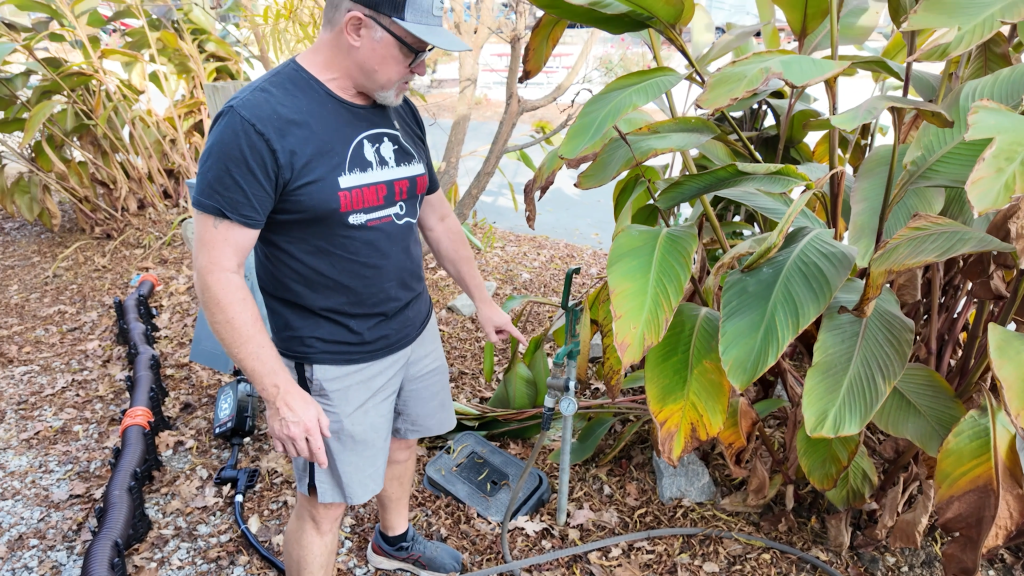 If you’re connected to city water through an external hose, disconnect it immediately—even if it’s a heated hose. Here’s why:
The Spigot is the Weak Point:
Even heated water hoses can have issues in extreme cold, but the real danger is the campground’s water spigot. If that spigot freezes and bursts because you left your hose connected, you could be liable for the damage.
Many campgrounds will explicitly warn you: if you cause damage to their water system because you didn’t take proper precautions, they will charge you for the repairs. And trust us, that’s not a bill you want to get.
What we did:
- Disconnected our water hose completely from both the RV and the spigot
- Drained all remaining water from the hose
- Stored the hose in our basement compartment where it would stay protected
- Switched to using our internal fresh water tank for all our water needs
This simple step protects the campground’s water system, prevents potential damage charges, and eliminates the risk of frozen hose connections at your RV.
3. Manage Your Holding Tanks
Your holding tanks are one of the most vulnerable parts of your RV in freezing temperatures. Our approach depends on whether you have heated tanks or not.
We Have Heated Tanks – Here’s What We Did:
Since our RV has factory-installed heated holding tanks, our protocol is different than RVs without this feature:
Fresh Water Tank:
- We filled our fresh water tank completely before the temperature dropped
- This lets us use our internal water supply instead of relying on external connections
- The water inside your heated RV stays warmer than water coming through frozen external lines
- Our heated tanks provide an extra layer of protection
Gray and Black Tanks:
- With heated tanks, we don’t typically need to add antifreeze for short-term cold snaps
- However, antifreeze doesn’t hurt and provides extra insurance
- If you DON’T have heated tanks: Adding RV antifreeze to your gray and black tanks is essential (about a gallon in each)
- The antifreeze mixes with existing water and lowers the freezing point
- Important: Always use pink RV antifreeze, NOT green automotive antifreeze—RV antifreeze is non-toxic
The Key Difference:
If your RV doesn’t have heated tanks, antifreeze becomes critical to preventing cracked tanks. A cracked holding tank can cost thousands to replace. This is where aftermarket heating solutions become absolute necessities.
eTrailer Cold Weather Solutions: Essential for Non-Heated Tanks
If you don’t have heated tanks built into your RV, aftermarket solutions from eTrailer aren’t optional—they’re essential equipment for cold weather RVing.
Do You Need These Products?
If you have heated tanks like we do: You already have built-in protection, but these products are still valuable as backup systems or if you’re going to be in extreme cold for extended periods.
If you DON’T have heated tanks: These aren’t just “nice to have”—they’re critical equipment. Without heated tanks, you’re one cold night away from potential disaster.
Many RVs—especially older models and budget-friendly options—don’t come with heated tanks. If that’s your situation, investing in these aftermarket solutions now will save you thousands in potential repair costs later.
ThermaHeat RV Holding Tank Heater Pad
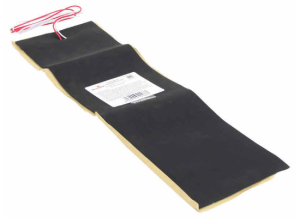 If your RV doesn’t have factory-installed tank heaters, this is your solution. The ThermaHeat pad attaches directly to your holding tanks and keeps them above freezing, even in extreme cold.
Why you need it:
- Prevents cracked tanks (which can cost thousands to replace)
- Works even when temperatures drop to single digits
- Simple installation—attaches with adhesive
- Much cheaper than replacing a damaged tank
Shop ThermaHeat RV Holding Tank Heater Pad →
Xtreme Heaters RV Basement and Boat Bilge Heater
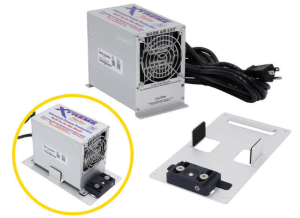 Your underbelly compartments are incredibly vulnerable to freezing—all your plumbing, water pump, and connections live down there. The Xtreme Heater is specifically designed to keep these enclosed spaces warm.
Why it’s essential:
- Circulates warm air throughout your basement compartments
- Protects not just tanks, but ALL vulnerable plumbing and components
- Thermostat-controlled—only runs when temps drop, so you’re not wasting power
- Compact design fits in tight spaces
Shop Xtreme Heaters RV Basement Heater →
eTrailer also carries:
- Heated water hoses
- RV antifreeze
- Dehumidifiers
- Tire covers
- All the winter prep gear you need
Plus, their installation videos are incredibly helpful—they make DIY projects actually doable. Browse all eTrailer winter RV products →
4. Insulate Everything You Can
We pulled out every insulation trick we know:
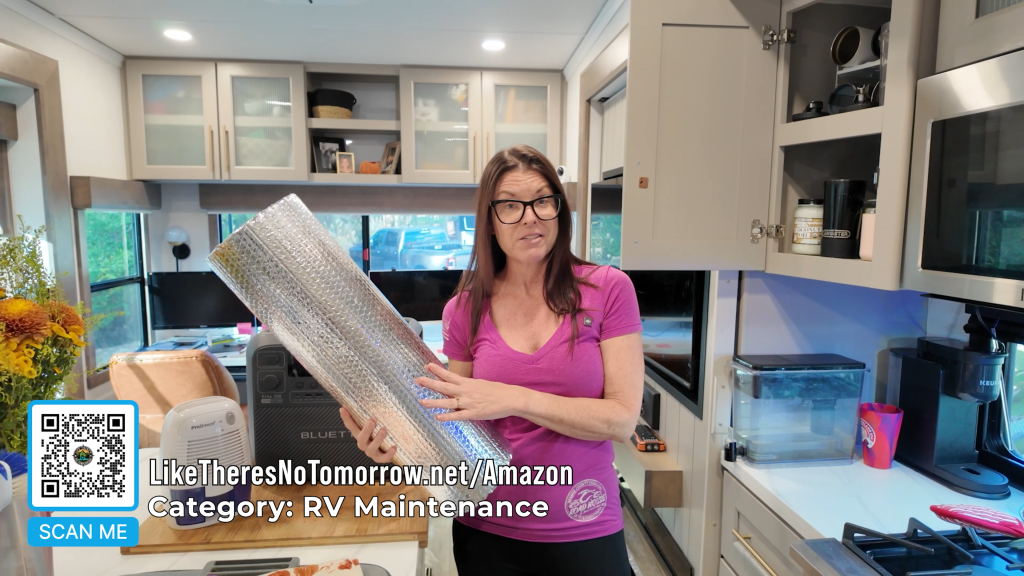
Reflectix Window Insulation:
We have custom-cut Reflectix panels for every window in our RV. These reflective insulation panels go up in minutes and make a massive difference in heat retention.
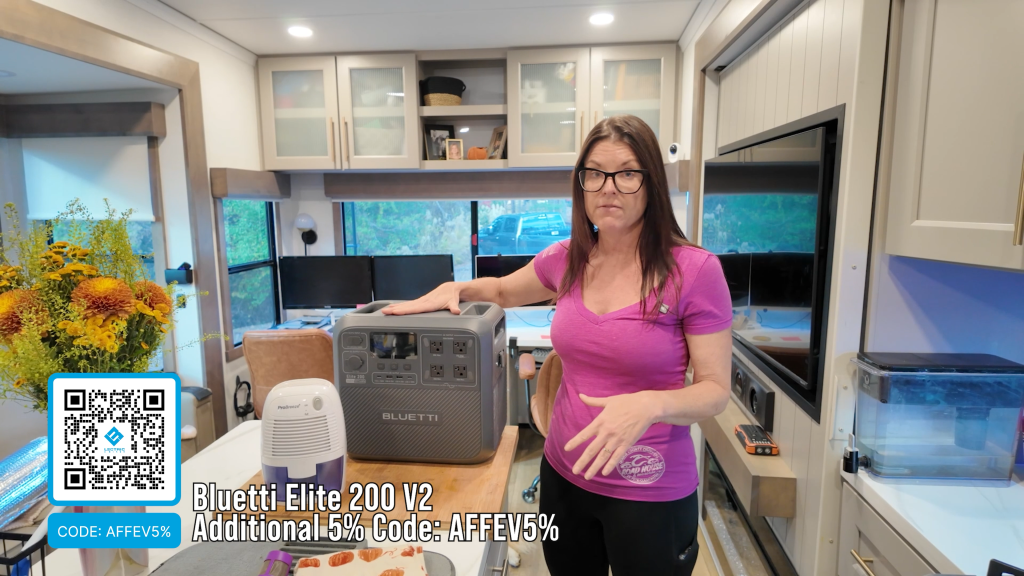 Bluetti Elite 200 Power Station – Backup Power When You Need It Most:
One thing we always stress: having a backup power source is crucial during cold weather emergencies. If you lose shore power in the middle of a cold snap, you need a way to keep critical systems running.
Our Bluetti Elite 200 Power Station gives us that peace of mind. It can power our essential systems if we lose campground power, and it’s powerful enough to run our heating solutions, charge devices, and keep our critical RV systems operational when we need them most.
Shop Bluetti Elite 200 Power Station → Use code AFFEV5% for an additional 5% OFF!
Pool Noodles for Slide-Out Gaps:
We use cut pool noodles to fill the gaps where our slide-outs meet the RV body. These gaps let in cold air and drafts, and the pool noodles create an effective seal.
Close All Vents and Hatches:
We made sure every roof vent, bathroom vent, and access hatch was completely closed. Even small openings let cold air in when temperatures are this low.
You also may want to look into insulation for your vents, skylights and fan opening. Here are some ideas.
5. Interior Heating Strategy
Even with your furnace running, interior heat management matters:
- Opened all cabinet doors where plumbing runs (under sinks, in the bathroom)
- This lets warm air circulate around your pipes
- Set the furnace to 65°F—high enough to keep everything safe, but not burning through propane unnecessarily
- Closed off any areas we weren’t using to concentrate heat where it mattered most
The Result: We Made It Through the Night
After all that prep, we made it through the cold snap with zero issues. No frozen pipes, no damaged tanks, no emergency repairs. Just a cold night that we were prepared for.
The lesson? Cold weather RVing is totally doable if you’re prepared. And preparation is so much easier (and cheaper) than dealing with the aftermath of frozen, burst pipes.
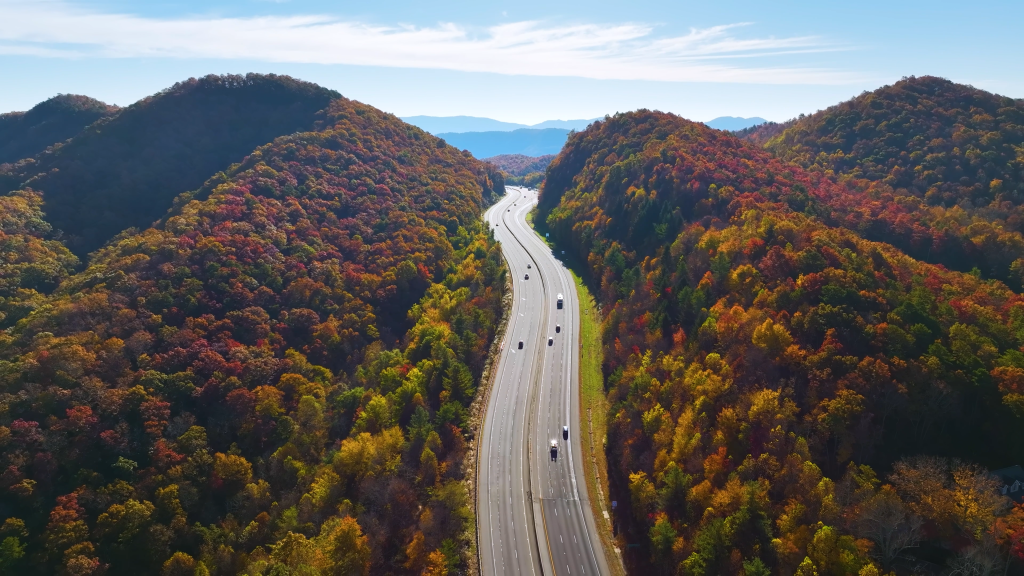
Now, Let’s Talk About Why We Were in Asheville in the First Place
Because despite that cold snap, Asheville is absolutely worth it. This city is hands-down one of our favorite places we’ve ever visited—and we’ve been all over the country.
What makes Asheville perfect for RV travelers? It’s this incredible mix of art, nature, culture, and pure fun. Mountain views, craft everything, creative energy everywhere you look, and some of the friendliest people you’ll ever meet.
Where to Stay: Rutledge Lake RV Park
We set up camp at Rutledge Lake RV Park in Fletcher, NC, just south of Asheville. Great location with easy access to everything, full hookups, and reasonable rates.
Other options we’ve heard great things about:
- Mama Gertie’s Hideaway – More upscale with incredible mountain views ($$$ but worth it if you want something special)
- Campfire Lodgings – Another highly-rated option with mountain views
One to skip: Asheville West KOA. Way too much highway noise for our liking.
Blue Ridge Parkway: An Absolute Must
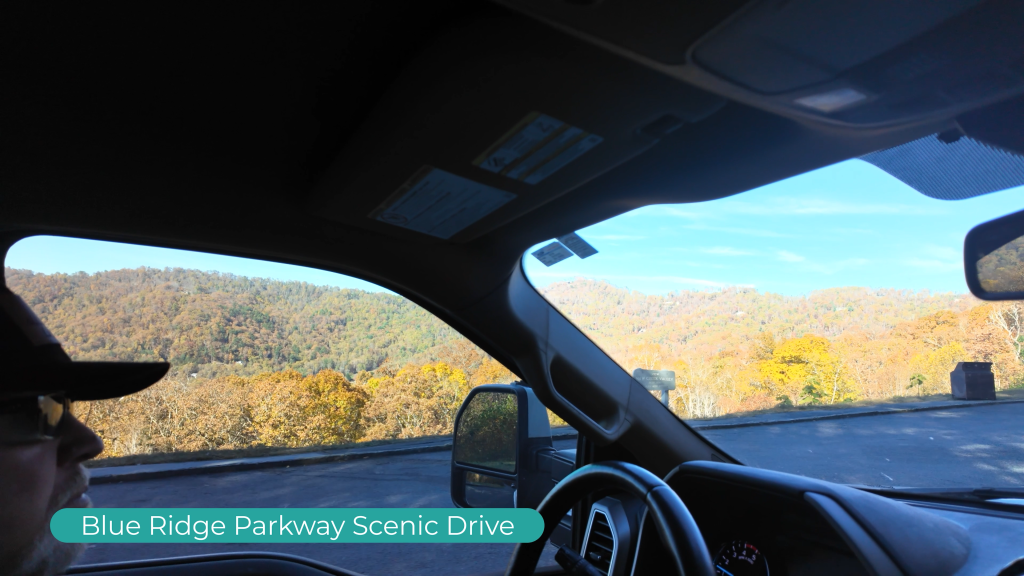 No visit to Asheville is complete without driving the Blue Ridge Parkway. This scenic highway is absolutely stunning, especially during fall when we visited.
We’d originally planned to hit Craggy Pinnacle and the Craggy Gardens Trails—they’re legendary—but unfortunately they’re still closed from storm damage. So we adapted.
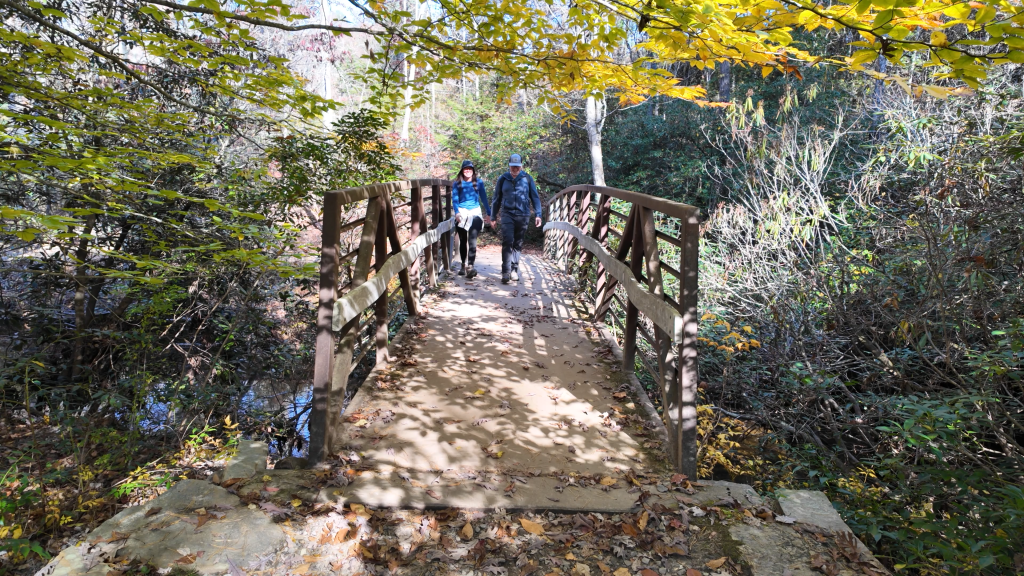
Masters Park to Haw Creek Valley Overlook Hike
This hike became our alternative, and wow… we were not disappointed.
What made it special:
- Fall colors at their peak
- Leaves crunching under our feet
- Stunning mountain views
- Moderate difficulty—doable for most fitness levels
- Not crowded (a bonus!)
The trail winds through forest and opens up to overlooks that’ll make you stop and just stare. This is why we live this lifestyle—moments like these.
 North Carolina Arboretum: A Full Day of Beauty
If you want a full day of nature immersion without steep climbs, the North Carolina Arboretum is an absolute must-visit. And we’re talking a FULL day here.
The details:
- Cost: $20 per vehicle for all-day access
- You can come and go all day—perfect flexibility for RVers
- 434 acres of stunning gardens and natural areas
- Over 10 miles of hiking and biking trails
Trail options:
- Easy paved paths for casual strolls
- Moderate forested trails for more adventure
- The Bent Creek Trail and Hard Times Trail are favorites for true forest hiking
What we loved most? The variety. One minute you’re walking through meticulously designed garden spaces—the National Bonsai & Penjing Museum collection alone is worth the admission—and the next you’re surrounded by native forest and fall foliage.
Because you can come and go all day, you could easily split your visit—hike in the morning, head into town for lunch, then come back for a sunset walk through the gardens. That flexibility is perfect for the RV lifestyle.
 Asheville Arts District: Creativity Everywhere
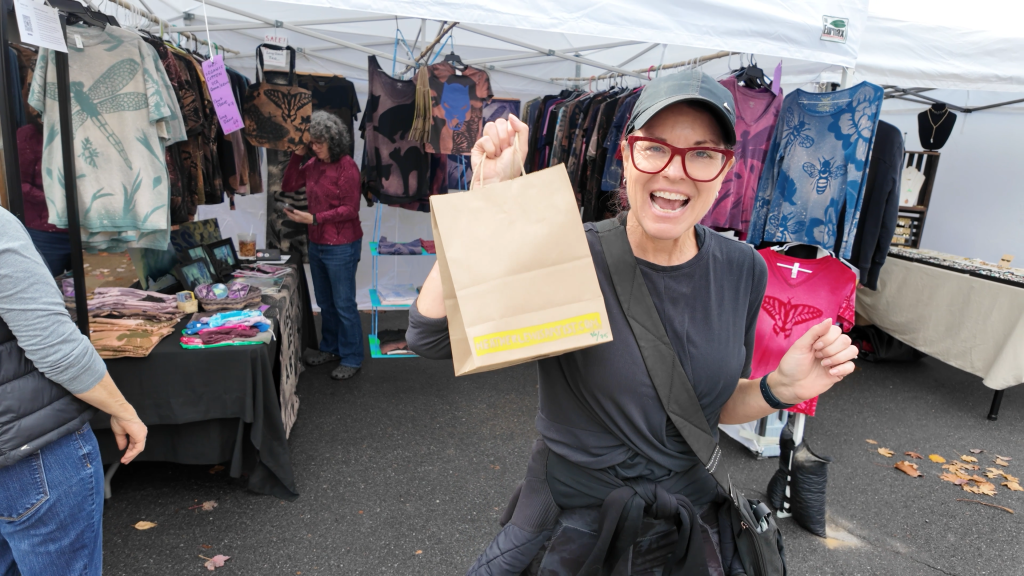
One of our favorite days was loading up our Lectric ebikes and cruising into Asheville’s River Arts District. This is where the city’s creative soul really shines.
The River Arts District is this incredible collection of working artist studios, galleries, and creative spaces—most housed in former industrial buildings along the French Broad River.
What makes it special:
- Watch artists at work in their studios
- Chat with them about their process
- Pick up one-of-a-kind pieces you won’t find anywhere else
- It’s authentic, not touristy
Important note: This area was hit particularly hard by the flooding from Hurricane Helene, so visiting and supporting these local artists means even more right now. The resilience and creativity we saw here was genuinely inspiring. These folks aren’t just rebuilding—they’re thriving.
North Asheville Tailgate Market: Community at Its Best
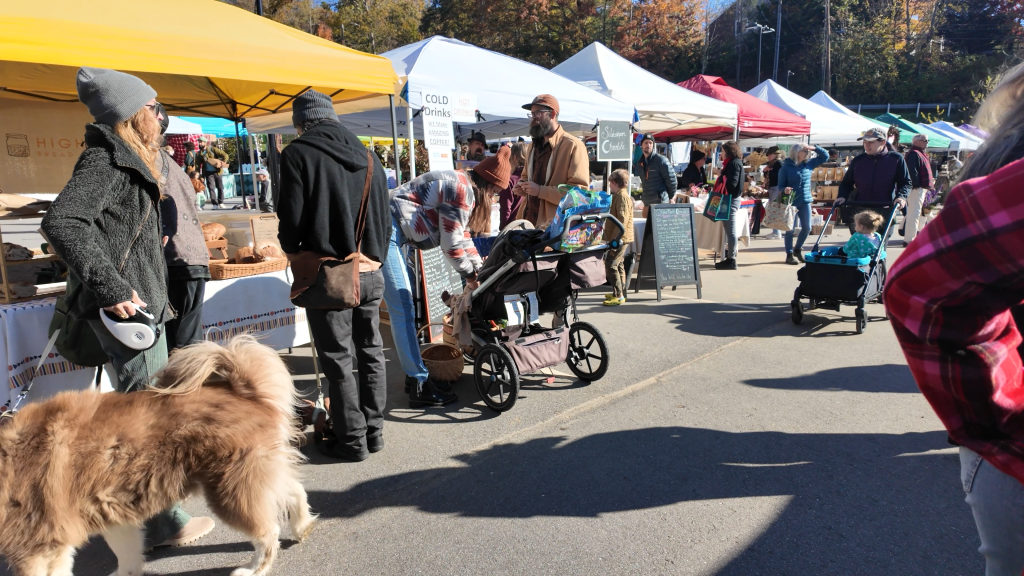
If you’re in town on a Saturday morning, you absolutely have to check out the North Asheville Tailgate Market up at the UNCA campus.
This isn’t your typical small-town farmers market—this thing is serious.
What you’ll find:
- Dozens of vendors
- Farm-fresh eggs and locally raised meats
- Artisan breads and homemade jams
- Fresh produce
- Local honey
- Live music
- The smell of fresh-baked goods everywhere
What we love about markets like this is that genuine connection to the community. You’re not just buying produce—you’re meeting the people who grew it, hearing their stories, supporting local agriculture. It’s that authentic small-town America experience that reminds you why exploring this country is so rewarding.
 LaZoom Bus Tour: Embrace the Weird
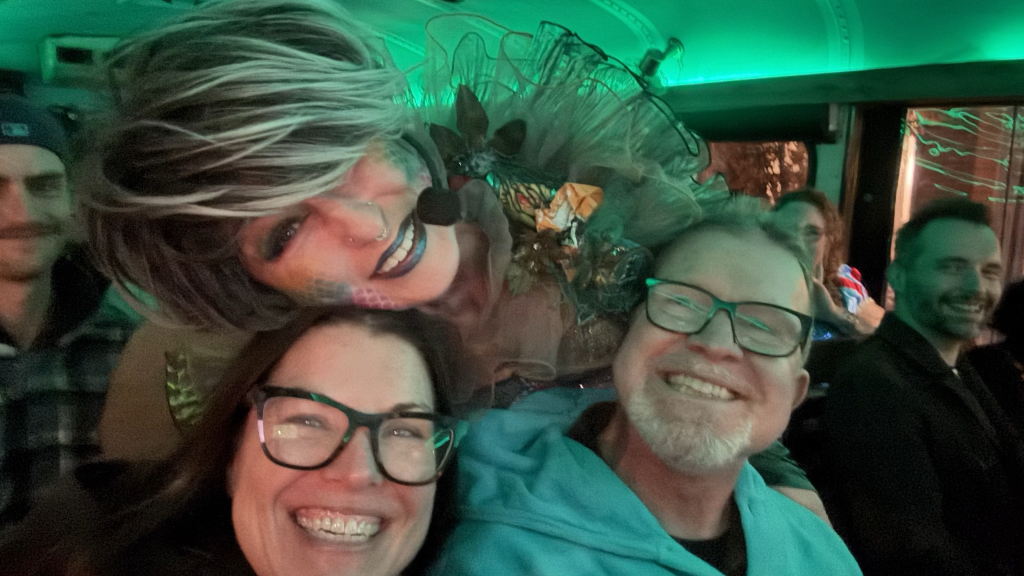
Alright, so here’s the thing about Asheville—it’s weird. Like, wonderfully, unapologetically weird. And nothing captures that spirit better than the LaZoom Comedy Bus Tour.
We’d done this haunted comedy tour on our first visit years ago, and it was literally one of the reasons we wanted to come back. It’s that good.
The experience:
The Staging Area:
The experience starts at this wild bar and staging area—think funky, eclectic, pure Asheville vibes. You can grab a drink while you wait, and here’s the best part—they’ll make you a little cooler of drinks to take on the bus. Because apparently drinking while touring is very much encouraged here.
The Tour:
Then your host gets on—and “host” doesn’t quite capture it. Think part comedian, part historian, part chaos coordinator. They’re weaving stories about Asheville’s haunted past with off-color humor that had us crying laughing.
But wait, it gets better. Random characters jump on and off the bus throughout the route—each one adding their own bizarre twist to the narrative. It’s theater, it’s comedy, it’s a history lesson, and it’s completely unpredictable.
Our take:
Honestly? In all our travels, this remains one of the most memorable tours we’ve ever experienced in any city. If you only do one thing in Asheville besides hike—do this. Just… embrace the weirdness.
New Belgium Brewery: The Perfect Wind-Down
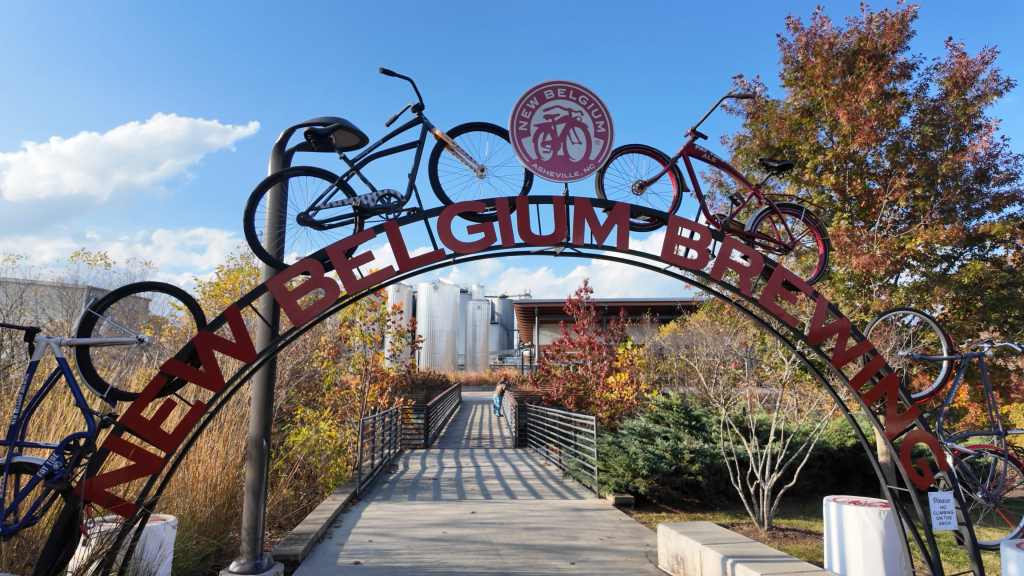 We capped off our bike ride day at New Belgium Brewing Asheville. After cruising through the Arts District all afternoon, this was the perfect way to wind down.
Why we loved it:
- New Belgium’s Asheville location is massive and gorgeous
- Situated right along the French Broad River
- Incredible outdoor space
- Great beer selection (obviously)
- Relaxed, friendly atmosphere
We grabbed a flight to sample their offerings, found a spot on the patio, and just… exhaled.
There’s something about sitting by the river with a cold craft beer after a day of biking and exploring that just feels right, you know? This is Asheville in a nutshell—adventure, creativity, great beer, and taking time to actually enjoy the moment.
Plus, those bikes made getting back to the RV a whole lot easier than it would’ve been otherwise!
Final Thoughts: Asheville is Worth Every Degree
Asheville proved to us once again why it’s such a special place. From those stunning mountain views on the Blue Ridge Parkway to the creative energy of the Arts District, from the community spirit at the farmers market to the pure joy of that ridiculous bus tour—this city just works.
Sure, the weather threw us a curveball at the end—welcome to mountain living, right? But honestly, that’s part of the adventure. That’s part of why we do this.
And seeing this community bounce back from such devastating floods? It just reinforced what we already knew—Asheville’s spirit can’t be broken. The people here are as resilient as they are creative, and they deserve our support.
This is a place we’ll keep coming back to, again and again.
If you haven’t been yet? Put it on your list.
Your Turn: Are You Prepared for Cold Weather RVing?
Have you dealt with unexpected cold snaps in your RV? What’s your cold weather prep strategy? Drop a comment below—we’d love to hear what works for you!
And if you’re planning an Asheville trip, let us know what’s on your must-see list!
More Resources:
 Ready to go full-time? Check out our complete online course: Full-Time RV Living Course
 RV Gear We Use and Love: Our Amazon Shop
 Plan Your Routes: RV Trip Wizard – Save 25% automatically
We believe in transparency – some links above are affiliates and we may be compensated for products covered. Our authentic opinions aren’t swayed – we’ll always give you the real deal.