Ever feel like you’re living in a boat instead of an RV? You know what I’m talking about – your partner gets up for a midnight snack and suddenly you’re riding the waves in bed. We’ve been there, and after four years of full-time RV living, we finally decided to test EVERY stabilization solution we could get our hands on.
Why Your RV Shakes (And Why It Drives Everyone Crazy)
Living in an unstable RV is no fun for anyone – especially Darlene. Every morning when I’d get up to make coffee and take our dog out, she’d feel every single step. In our old 44-foot toy hauler, it was even worse. The shaking would travel all the way from my office in the back to the bedroom up front.
Here’s the science: RVs shake for two main reasons. Front-to-back motion comes from your tires, while side-to-side motion comes from your jacks. Most stabilization products target one or both of these issues. But before you can stabilize anything, you need to be level – you can’t stabilize an unlevel RV.
Our Testing Setup: Getting Scientific About Shaking
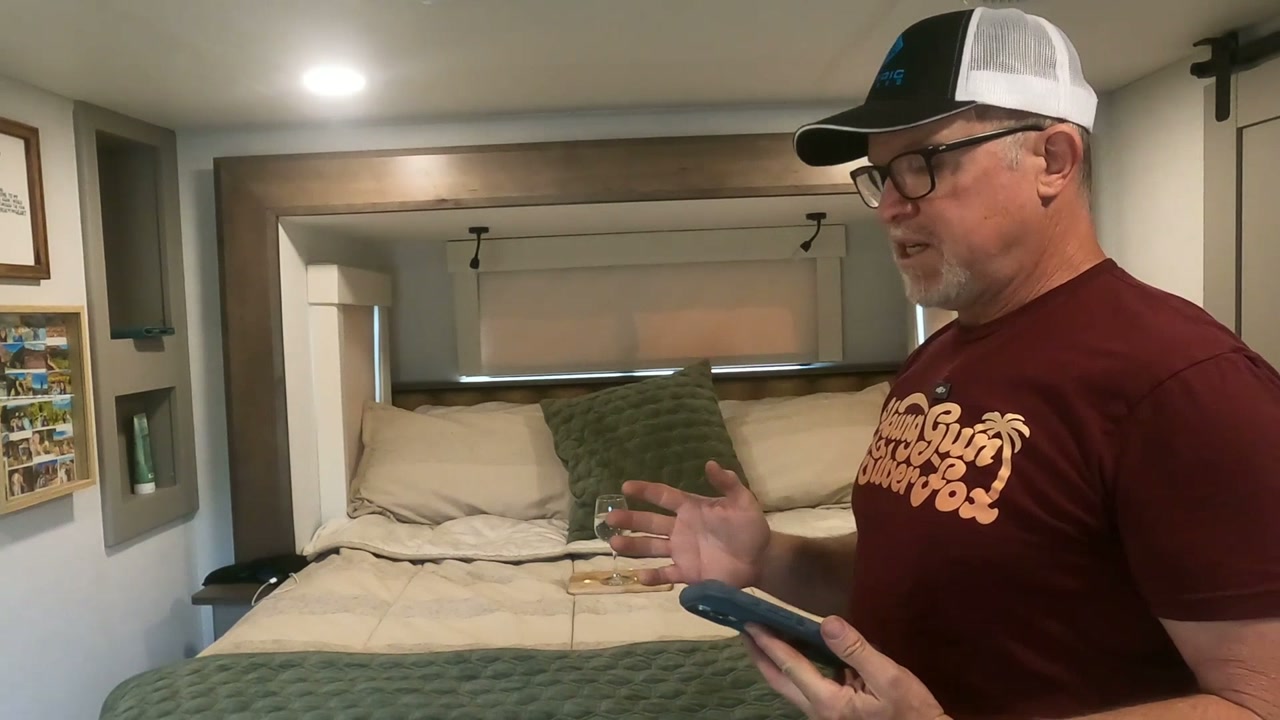
We used a free app called Phyphox that measures acceleration to get actual numbers on how much the RV was moving. We also set up a camera on a glass of water for a visual reference. Every test involved me doing my normal morning routine – getting dressed, walking to my desk, and taking the dog out.
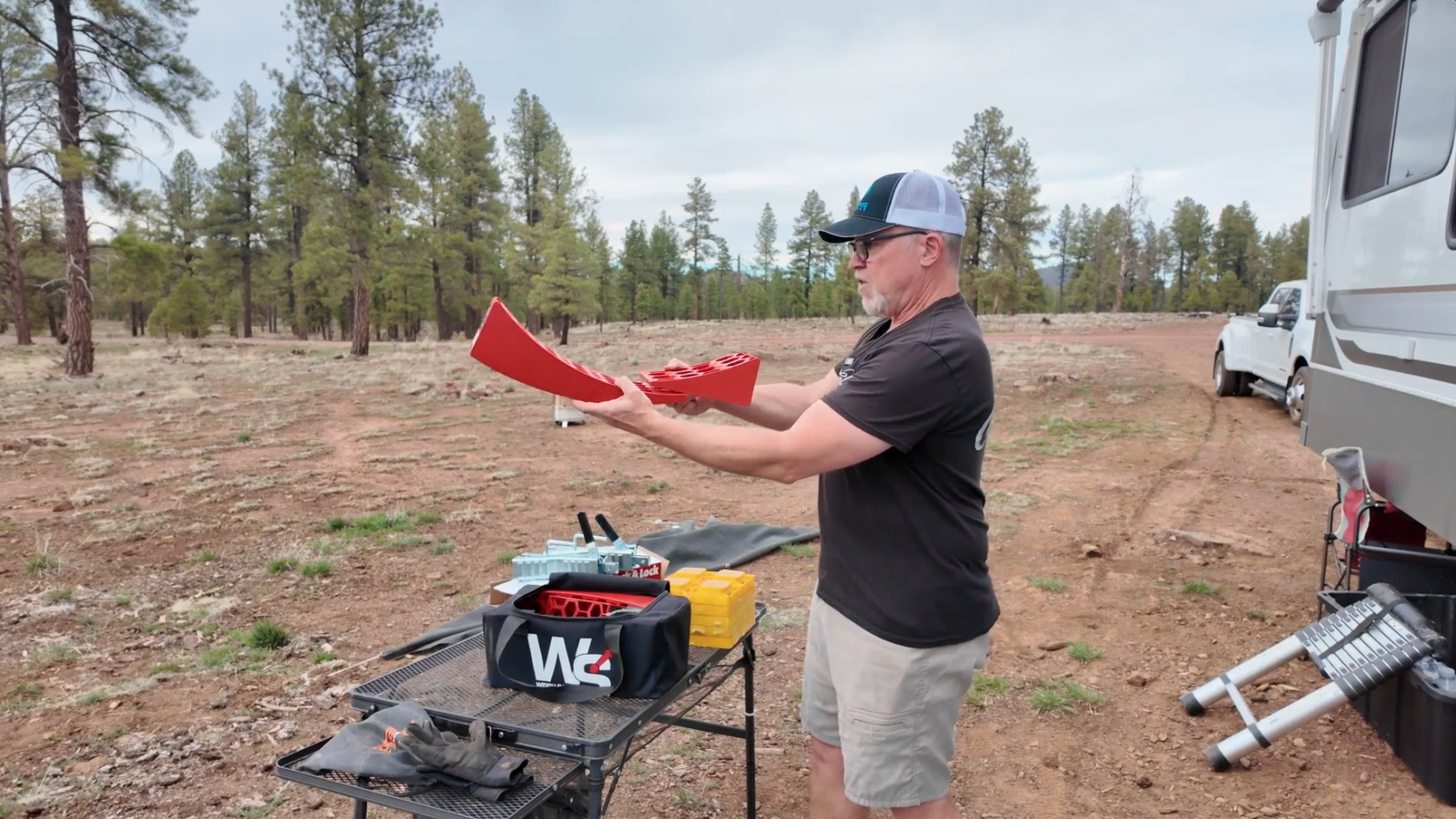
Underneath our jacks, we use Weigh Safe Leveling Kit with Wheel Chocks from Weigh Safe from etrailer. These bad boys can handle serious weight and help lower your center of gravity. We also keep standard leveling blocks on hand for when the flapjacks are too tall.
Quick tip: If you’re shopping for wheel levelers, don’t cheap out. We recommend the Weigh Safe Leveling Kit with Wheel Chocks with a 29,700-pound vehicle rating – these won’t crush like the cheap ones on Amazon.
Test Results: What Actually Works
Starting with our baseline test (nothing installed), the app showed 0.353 units of movement. Then we tested each solution:
Wheel Chocks Only: These Ultra-Fab Chock and Locks ($118.46) gave us a tiny improvement to 0.351. They’re great for eliminating tire roll, but that’s about it. Make sure you measure between your tires before ordering – they come in different sizes.
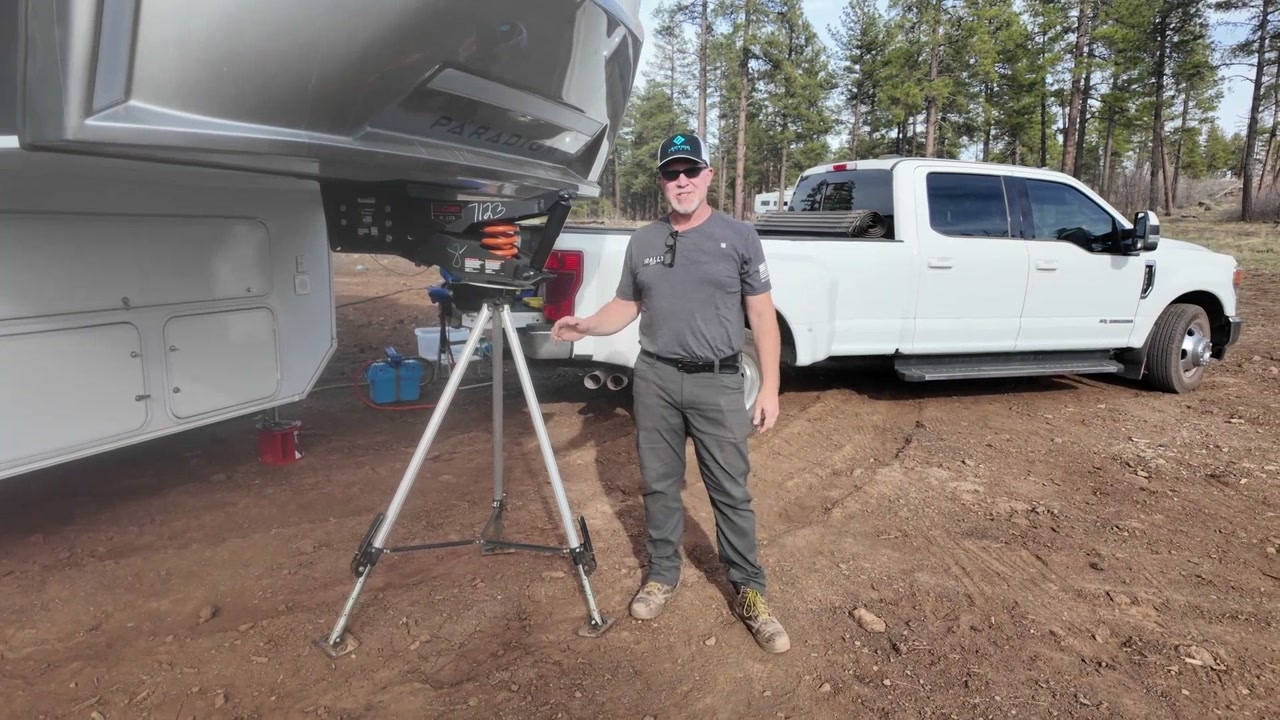
Pin Box Tripod + Chocks: Adding a pin box stabilizer dropped us to 0.347. Better, but still not great. Ultra Fab makes several models ranging from $132 to $313 (for the aluminum version). This was our old setup, and honestly, it wasn’t enough.
The Game Changer: JT Strong Arms
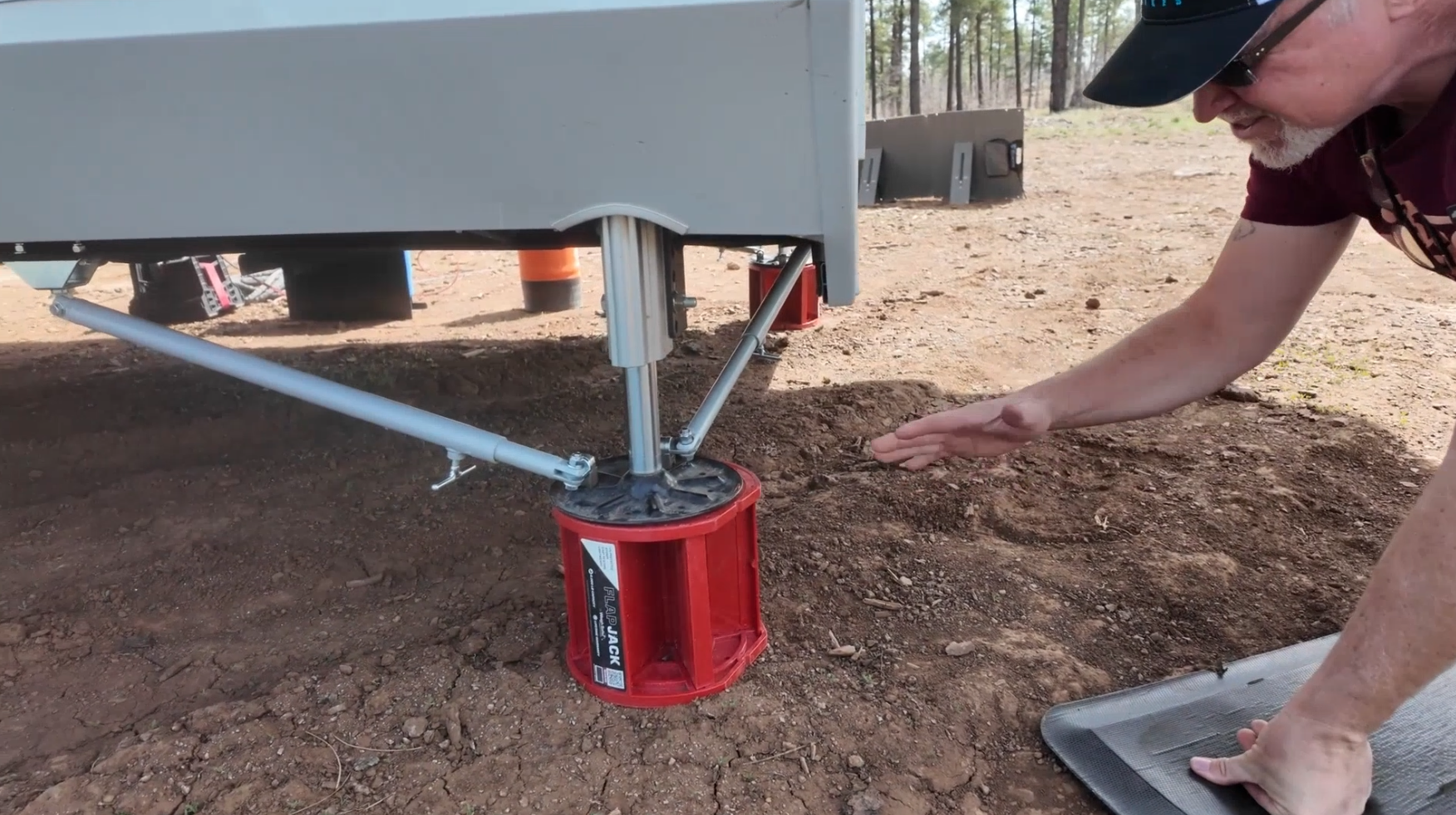
Here’s where things got interesting. The JT Strong Arm stabilizers dropped our movement to 0.234 – that’s a 33.7% improvement! These create triangulation between your jacks and chassis, locking everything down tight.
The installation took some work (thank goodness for etrailer’s video guides), but once they’re on, you just tighten and loosen them at each stop. No more hauling out separate stabilizers every time we park. The base kit runs $357-$369, and if you have hydraulic jacks like us, you’ll need adapters and extra hardware.
Pro tip: Always remember to loosen the Strong Arms before raising your jacks, or you’ll have problems!
Cost vs. Convenience: Making Your Choice
You could go with separate stabilizers – rear stabilizer ($250), front tripod ($150), and wheel chocks ($87) for about $487 total. But that means setting up and tearing down multiple pieces at every stop. The Strong Arms cost more upfront but save tons of time and hassle.
After four years of dealing with RV shake, we wish we’d discovered these sooner. The difference is night and day – Darlene can actually sleep through my morning routine now! Plus, when those 50 mph winds hit, the extra stability really pays off.
If you’re dealing with RV shake, start with proper leveling, then add wheel chocks for basic stability. But if you’re serious about eliminating movement, the JT Strong Arms are worth every penny. Check out etrailer’s selection – they’re open 7 days a week with real people who can answer your questions.
Your Next Steps
Ready to stop the shake? Head over to etrailer to find the right stabilization setup for your RV. They’ve got detailed videos for every product and installation.
What stabilization challenges are you facing in your RV? Drop a comment below – we love hearing from fellow RVers and sharing what we’ve learned on the road!