🔋 BLUETTI Elite 300 – Launch Info (UPDATED)
🚀 Pre-Launch Page (Subscribe for Launch Alerts)
🛒 Official Sales Page (Goes Live 10 Minutes Before Launch)
💥 Launch Time:
📅 March 8, 2026 🕕 7:00 PM (PDT)
🎉 Use Code: LTNT8OFF for 8% OFF at Launch
If you’re considering this unit, subscribe on the pre-launch page so you don’t miss launch pricing and our 8% discount.
Most RV power tests happen in perfect conditions.
This one didn’t.
We plugged a portable power station directly into our 40-foot fifth wheel and ran it the way we actually live — residential fridge cycling, Starlink pulling power, air fryer spikes, computers running all day, TV at night, and real overnight battery drain.
No lab conditions.
No cherry-picked numbers.
Just honest, real-world boondocking data.
But before we go further, let’s be clear:
We already run a full off-grid system.
This test was about something different.
Our Current Off-Grid RV Setup (Bluetti RV5 + Roof Solar)
We currently run:
400W of roof solar
A 280Ah lithium battery bank
The Bluetti RV5 inverter system
If you want the full breakdown of why we replaced Victron with Bluetti, you can read that here:
Or watch the full RV5 video here:
That system powers our full-time lifestyle.
But many RVers don’t want a complicated install.
They don’t want to run cables, mount panels, or install an inverter system.
They just want to try boondocking without a $10,000 = $25,000 commitment.
That’s where the Bluetti Elite 300 comes in.
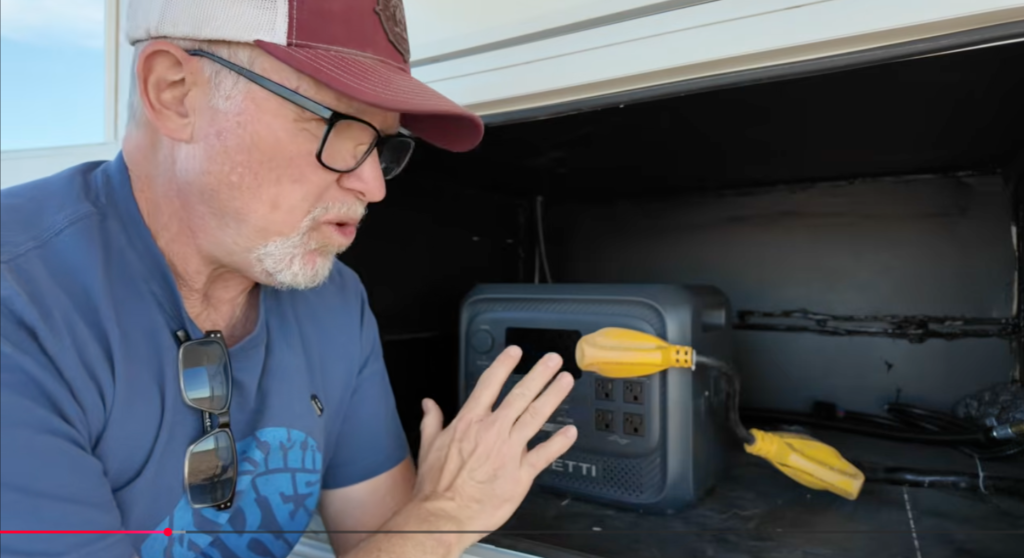 Bluetti Elite 300 Overview (Why the 30 Amp Plug Matters)
The Bluetti Elite 300 is different from smaller portable units because it includes:
A true 30 amp RV outlet
3,000Wh battery capacity
App monitoring
Solar input compatibility
Generator charging capability
That 30 amp outlet means you can plug your RV directly into it using a dog bone adapter — just like plugging into shore power.
No rewiring required.
The Elite 300 officially launches March 8.
After launch, we’ll be adding an additional 8% discount — so check back soon for that update.
Real-World RV Power Consumption (What Actually Drains Batteries)
When people think about boondocking power, they worry about big spikes.
Microwaves. Coffee makers. Hair dryers.
But those aren’t the real problem.
The real problem is constant loads.
Residential RV Refrigerator
A residential fridge can use roughly 1,200–1,500 watt-hours per day.
It cycles all day long.
It never really stops.
Starlink Power Drain (Important)
Starlink typically pulls 400–600 watt-hours per day.
If you leave it on overnight, it can drain 15–20% of your battery without you realizing it.
The fix?
Set a sleep schedule in the app.
Go to:
Settings → Starlink → Sleep Schedule
Turn it off while you’re sleeping.
Huge difference.
Air Fryer Test (High Wattage Spike)
We heated leftovers in the air fryer to test spike handling.
It handled it just fine.
Short bursts aren’t the issue.
Constant draw is.
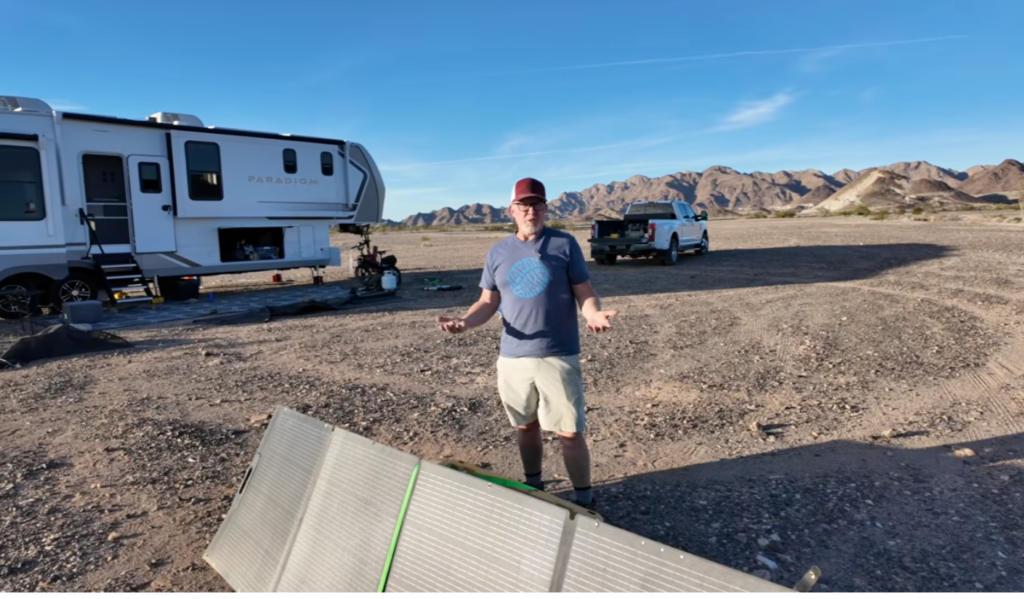 Portable Solar Panels vs Roof Solar Panels
We used a 350W portable solar panel for this test.
Portable panels have a big advantage:
You can move them.
Morning sun? Reposition.
Afternoon angle shift? Reposition.
Parked in partial shade? Move them into open light.
Flat roof panels are convenient — but portable panels can be more efficient if you actively manage them.
The trade-off is setup time and wind management.
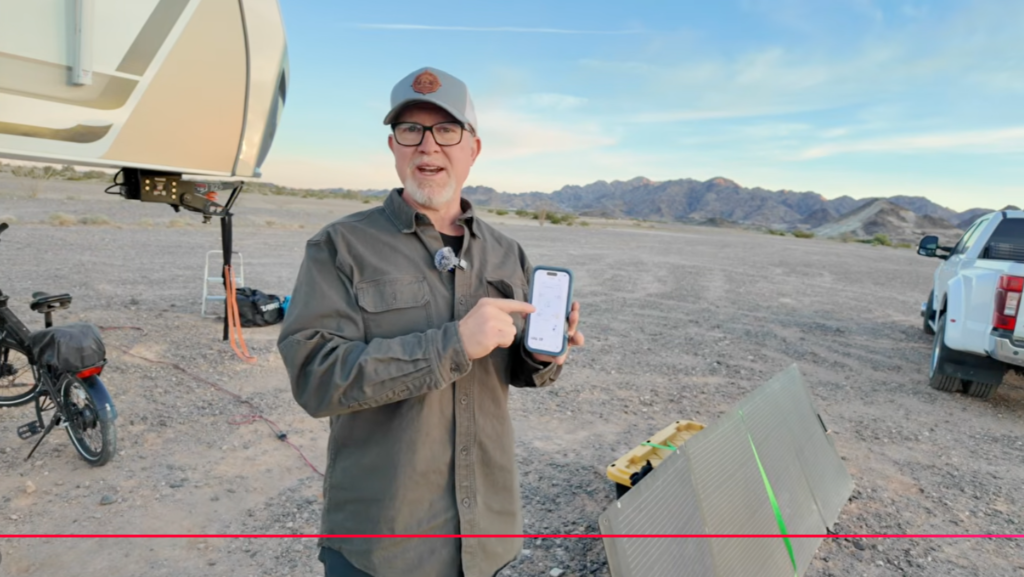 Overnight Battery Results (The Real Test)
Here’s what happened.
End of day:
We had been working on computers all day, running Starlink, and watching TV in the evening.
Before bed: 54%.
Overnight draw included:
Starlink (until sleep mode)
Humidifier
Parasitic loads
Morning result: 18%.
That’s real usage.
Not ideal conditions.
Not staged.
If you reduce TV time, eliminate overnight humidifier use, or use propane refrigeration, your results would be even better.
Can It Run Air Conditioning?
No.
Even efficient RV air conditioners draw too much continuous power for a portable unit like this.
If you plan to run A/C off battery, you need a much larger permanent system.
For moderate climates?
This works.
For desert summer heat?
You’ll want hookups or a bigger setup.
Charging With a Generator
One big advantage:
The Elite 300 can recharge at roughly 1,000 watts.
Using a standard 2000W inverter generator, you can fully recharge it in about two hours.
That’s far better than running a generator all day.
Think of generators as battery chargers — not primary power sources.
Here’s the link to our Boondocking Folder on Amazon. It’s filled with our favorite Boondocking products and gear.
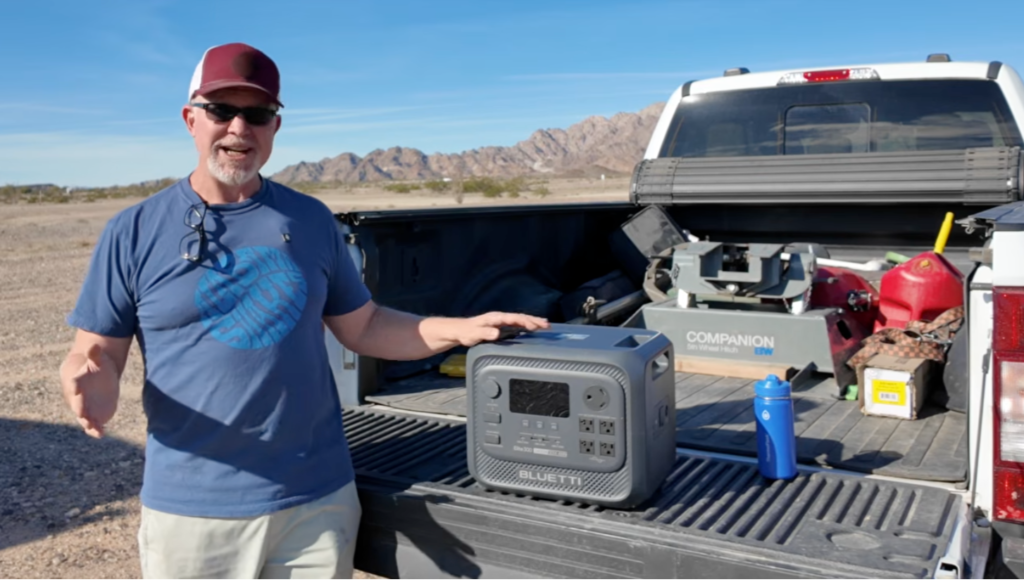 Who This Setup Is Actually For
This is ideal for:
Weekend boondockers
Harvest Hosts stays
RVers curious about off-grid camping
People who don’t want a complex solar install
For under $2,000 (unit + solar panel), you can experiment with boondocking before investing in a full solar roof system.
And that’s the key.
This isn’t replacing our RV5 system.
It’s giving you a simple, lower-cost entry point.
Final Thoughts
If you’ve been curious about boondocking but hesitant about the cost or complexity…
This is your bridge.
It won’t run air conditioning.
It won’t power everything endlessly.
But it absolutely can power a large fifth wheel responsibly — if you understand your usage.
And that’s the real lesson.
The Elite 300 launches March 8.
We’ll be adding an additional 8% discount after launch — so check back here soon.
If you’re ready to learn how to build a full off-grid setup, check out our Off-Grid RV Camping Course and dive deeper into system design, battery sizing, and real-world usage planning.
See you out there.
Transparency
We believe in transparency — some links above are affiliate links and we may earn a small commission at no extra cost to you. Our authentic opinions aren’t swayed — we’ll always give you the real deal. By using them, you help enable bigger, better adventures at no extra cost. We couldn’t do this without you. Now let’s get out there.
⚖️ LIKE THERE’S NO TOMORROW: All Rights Reserved
This channel is for entertainment purposes only. We are not travel or RV experts. We share our opinions and what works for us, but you should do your own research and make your own decisions.